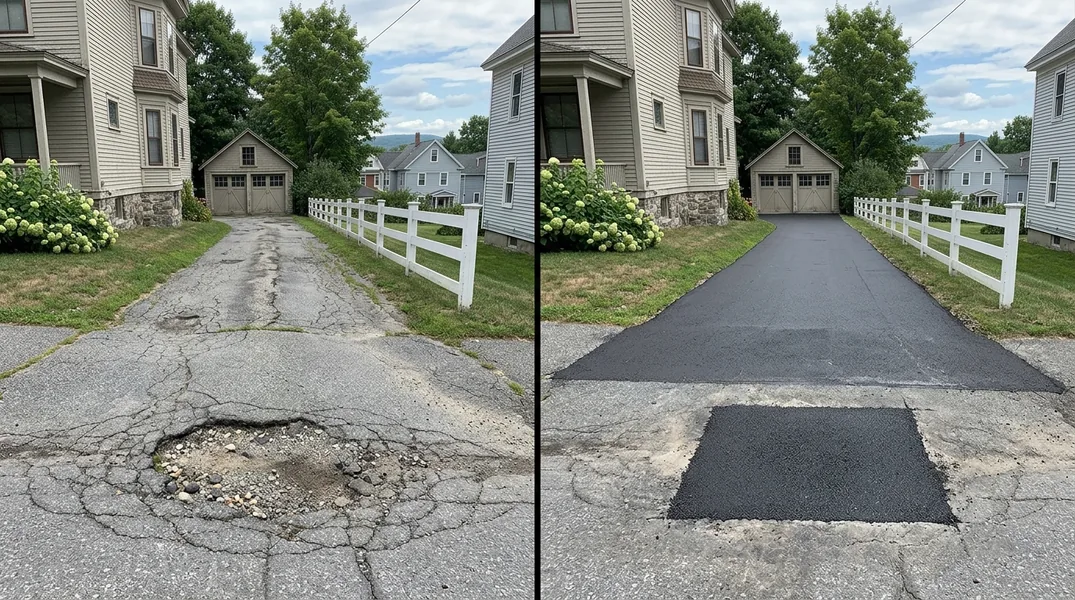
Understanding Potholes and Frost Heaves: What Vermont Winter Does to Your Driveway
After a harsh Vermont winter, many homeowners in Burlington step outside to find their driveways scarred with potholes, cracks, and uneven surfaces. These problems aren't just cosmetic inconveniences. They're the result of a natural cycle that repeats every year in our climate: water seeps into small cracks in the asphalt, freezes when temperatures drop, expands, and then thaws again. This freeze-thaw cycle is relentless, and over time it breaks down even well-maintained asphalt.
Frost heaves are another common winter problem. When moisture in the soil beneath your driveway freezes, it expands upward, pushing the asphalt surface with it. This creates those characteristic bumps and uneven patches that can damage your vehicle's suspension and make driving uncomfortable. Potholes, meanwhile, form when the weakened asphalt surface finally collapses under the weight of traffic, leaving behind a cavity that collects water and dirt. Both issues demand attention, but the right solution depends on how much damage your driveway has sustained.
Signs Your Driveway Needs Pothole Repair vs. Full Resurfacing
The first step in deciding between Pothole Repair & Asphalt Patching and a complete replacement is assessing the extent of the damage. If your driveway has one or two isolated potholes, a few surface cracks, and is otherwise in decent condition, patching is likely your best option. Patching works well for spot repairs because it's faster, more affordable, and can extend your driveway's life by several years. A professional crew can fill the pothole with fresh asphalt, compact it properly, and have you back on the road in no time.
However, if you're seeing widespread damage across 25 percent or more of your driveway's surface, multiple frost heaves, extensive cracking patterns, or if the underlying base is compromised, patching becomes a temporary band-aid rather than a real solution. In these cases, Asphalt Resurfacing & Overlay or full Asphalt Driveway Paving & Installation makes more sense. Resurfacing involves laying a new layer of asphalt over the existing base, while full replacement removes everything and starts fresh. Both approaches address the root causes of frost heave and pothole formation, not just the symptoms.
When Patching Makes Sense: Quick Fixes for Minor Winter Damage
Patching is the right choice for homeowners dealing with isolated damage. If you have a pothole that appeared after the last thaw, or a handful of cracks that haven't spread significantly, a professional patch job can restore functionality and safety without breaking the bank. The process involves cleaning out the damaged area, ensuring proper drainage, and filling it with quality asphalt material. When done correctly by experienced contractors, a patch can last three to five years or longer, depending on traffic and weather conditions.
One important caveat: not all patches are created equal. Some contractors use temporary cold-patch materials that don't bond well to existing asphalt and fail quickly. Burlington Asphalt Paving uses hot-mix asphalt and proper compaction techniques to ensure patches stay in place. If you're considering Driveway Repair for minor damage, make sure you're working with a reputable local company that stands behind their work. A patch that fails after a few months isn't a bargain, no matter how cheap it was upfront.
When Repaving Is the Better Long-Term Investment
Full repaving or resurfacing becomes the smarter choice when your driveway has reached a tipping point. If you're patching the same spots year after year, or if new cracks appear within months of repair, your asphalt has lost its structural integrity. Frost heaves that are severe enough to create a safety hazard, or potholes that are deep and wide, also indicate that the underlying base may be failing. In these situations, patching is like treating a symptom while ignoring the disease. You'll spend money repeatedly without achieving a lasting solution.
Repaving gives you a fresh start. A new asphalt surface is more resistant to water infiltration, which is the root cause of frost heave and pothole formation. Modern asphalt formulations are also more flexible and durable than older mixes, helping them withstand Vermont's extreme temperature swings. While the upfront cost of repaving is higher than patching, the longevity is dramatically better. A properly installed new driveway in Burlington can last 15 to 20 years with routine maintenance, whereas patches might only buy you a few years.
Asphalt Driveway Repair Cost in Burlington: What to Budget
Understanding the financial side of this decision helps you make the right choice for your situation. Pothole patching typically costs between $150 and $500 per pothole, depending on size and depth. If you have multiple small issues scattered across your driveway, you might spend $500 to $2,000 on comprehensive patching. This is an attractive option for homeowners with tight budgets or those whose driveways are otherwise in good shape.
Full asphalt resurfacing generally ranges from $2 to $4 per square foot, while complete replacement can run $3 to $6 per square foot or more, depending on the size of your driveway, site conditions, and the quality of materials used. For a 500-square-foot driveway, that's a difference of $1,000 to $3,000 for resurfacing versus $1,500 to $3,000 for replacement. The exact pricing depends on many factors, which is why it's essential to get a professional assessment. Contact Burlington Asphalt Paving at (802) 214-7338 or request a free estimate to understand your options and costs.
How to Prevent Future Potholes and Frost Heaves
Once you've addressed your current damage, prevention becomes key. The best defense against frost heaves and potholes is keeping water off your asphalt. This means maintaining proper drainage so water doesn't pool on your driveway surface or seep into the base. Seal-coating your asphalt every two to three years creates a protective barrier that prevents water infiltration and extends the life of your driveway significantly. Filling small cracks promptly, before they become large ones, is also crucial. A crack that's a quarter-inch wide today can become a major problem next winter if left untreated.
Regular inspection during spring, after the winter thaw, helps you catch problems early. Look for new cracks, soft spots, or areas where the surface is becoming uneven. The sooner you address minor issues, the longer you can delay a major repair or replacement project. If you're unsure whether your driveway needs patching or more extensive work, the professionals at Burlington Asphalt Paving can provide expert guidance. Give us a call at (802) 214-7338 to discuss your driveway's condition and get a clear recommendation on the best path forward.
Looking for a professional asphalt paving contractor in Burlington? Burlington Asphalt Paving responds fast for all your asphalt paving needs.
Get a Free Quote