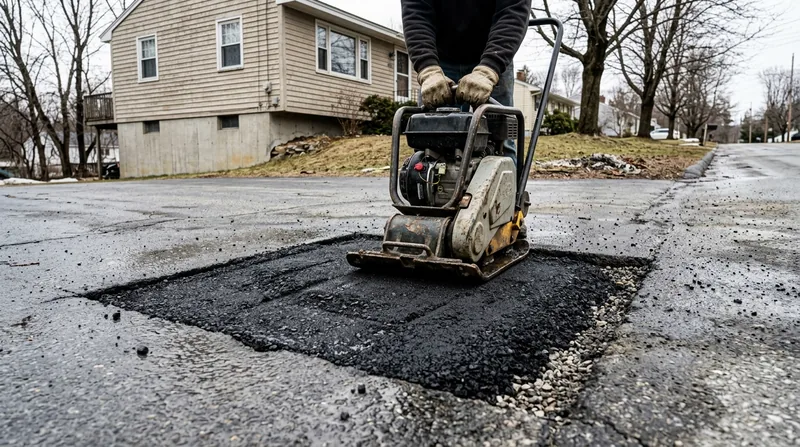




Burlington's freeze-thaw cycle and dense glacial clay create the perfect conditions for potholes to open fast come spring. Vermont's long mud season, heavy snow loads, and salt-and-plow wear tear into asphalt surfaces every year, and a single pothole can expand into a failed section within weeks if left unpatched. Pothole repair and asphalt patching in Burlington stops that damage before it spreads, and the sooner you book an assessment the moment frost heaves begin, the cheaper the fix stays. We cut square patches, tack-coat the edges, and compact hot mix into place, or we run infrared patching that recycles the surface in place for seamless repairs with no waiting. Burlington's Old North End triple-deckers and the Five Sisters' narrow shared drives, the Hill Section's long Victorian side drives, and the newer subdivisions in South Burlington and Williston all depend on fast pothole response each spring to keep their pavement intact through the season.
Why Pothole Repair Matters in Burlington's Spring Thaw Season
Potholes don't just look bad, they cost money fast. Once the freeze-thaw cycle breaks the surface, water gets under the asphalt, weakens the base, and the hole grows every time a vehicle crosses it. Burlington's transition from winter to spring is when the damage accelerates most, because the ground heaves hard and the freeze-thaw repeats dozens of times before the season fully turns. A patch caught early costs a fraction of what a full resurfacing costs later, and a failed section that spreads across thirty or forty percent of the driveway means the base is compromised and patching throws money away.
- Frost heaves four to five feet deep in Burlington's glacial till and Champlain Sea clay, opening gaps under the surface that water fills and freezes.
- Each freeze-thaw cycle expands the hole, and spring mud season softens the base layer further.
- A pothole that sits unrepaired for four to six weeks can expand from a single square foot to ten or more.
- Patching early in the season keeps the base intact and prevents the need for a full overlay or replacement down the road.
Early-season patching is the single most cost-effective move a Burlington homeowner or property manager can make.
Key info: Burlington and South Burlington's building departments do not require permits for driveway pothole repair or patching on private residential property. Commercial lots and parking areas should be verified with your local code office, and HOA driveways require approval from the association before work begins. Verify with your municipality before booking if you are unsure.
For more on how to identify when repair is the right call versus resurfacing or replacement, see our guide to driveway repair in Burlington.
How We Patch Potholes in Burlington: Two Methods
We offer two approaches to pothole repair, each with its own timeline and finish. Cold-patch methods work in off-season months, but hot-mix compaction and infrared patching are the standard during the paving season from May through October. The method depends on the pothole's size, the surrounding asphalt condition, and whether you need the repair done same-day or can wait a few days for the surface to cure. Both approaches deliver a lasting repair when the base is still sound and the pothole is caught before it spreads across the whole driveway.
- We assess the pothole and surrounding pavement to determine whether a single patch will hold or whether the damage extends into the base.
- Square-cut patches are cleaned, tack-coated, and filled with compacted hot mix asphalt, then rolled smooth and level with the surrounding surface.
- Infrared patching heats the existing asphalt, recycles it in place, and bonds new material seamlessly, leaving no seams or cold joints.
- We schedule the work during the paving season (May through October) to ensure proper curing and long-term durability.
The repair is ready for normal traffic within hours of completion, and curing continues over the next few weeks.
Example: A pothole on a Williston ranch driveway that opened in mid-March was patched in early April before the base weakened further. The square-cut repair cost $650 and held through the season. The same driveway, if left until July, would have required a full $4,200 resurfacing because the freeze-thaw had compromised the base layer across the entire drive.
To understand when patching is the right choice versus a full resurfacing, read our page on asphalt resurfacing and overlay in Burlington.
Pothole Repair Methods and Techniques
| Method | Description | Best For |
|---|---|---|
| Square-Cut Hot Mix Patch | Pothole is cut square, cleaned, tack-coated, filled with compacted hot mix, and rolled smooth. Standard method during paving season. | Single potholes or small groups on otherwise sound pavement. Durable, long-lasting repair. |
| Infrared Asphalt Patching | Infrared heating softens existing asphalt, recycles it in place, bonds new material seamlessly. No cold joints or seams. | Multiple potholes or repairs where seamless finish is desired. Fast turnaround, minimal disruption. |
| Cold Patch (Off-Season) | Temporary repair using cold-mix asphalt when hot-mix paving is not possible. Holds through winter but not a permanent solution. | Emergency repairs in November through April. Replaced with hot-mix patch when paving season opens in May. |
| Full-Depth Patch | Pothole is cut to the base layer, base is inspected and repaired if needed, then filled and compacted in lifts to surface level. | Potholes with damaged base layers or where the hole is deeper than six inches. Ensures lasting repair. |
Pothole Repair and Asphalt Patching Cost in Burlington: What to Expect
Pothole repair costs depend on the size of the hole, the depth, the condition of the base layer, and the method used. A single square-cut patch on a residential driveway typically runs from $450 to $850, while larger or multiple potholes, or repairs that require base work, cost more. Infrared patching is priced by the area and usually falls in the same range as square-cut patching for equivalent coverage. The key factor is whether the base is still sound, because a weakened base means the patch won't hold and you will need a resurfacing or full replacement instead.
- Single small pothole (under 2 feet square) with sound base: $450 to $650.
- Medium pothole (2 to 4 feet square) or multiple small potholes: $650 to $1,200.
- Large pothole or full-depth repair with base work: $1,200 to $2,500.
- Multiple potholes across thirty to forty percent or more of the surface indicate base failure and require resurfacing, not patching.
The best move is to get two or three written estimates that specify the size, depth, and method for each repair, so you understand what drives the cost and can compare apples to apples.
Key info: We provide written estimates with tonnage and thickness specifications so you know exactly what you are paying for. Estimates are free and there is no obligation to book. Call (802) 214-7338 for a same-day or next-day assessment during the paving season.
For a full pricing overview and other services, visit our pricing page.
What to Look for When Hiring a Pothole Repair Contractor Near Burlington
The asphalt paving trade attracts fraud because door-to-door crews with out-of-state plates still pitch the "we have leftover material from a job nearby" scam, and homeowners who don't know what to ask for get overcharged for thin patches that fail within a year. The strongest trust signal is a contractor with a local address, local insurance, and references from neighbors you can actually call. Ask to see the written estimate, including the size of the patch, the method, the depth, and the tonnage of material. If an estimate has no tonnage or thickness, walk away. Get two or three estimates before you book.
- Verify that the contractor is fully insured with a certificate of insurance you can request.
- Ask for references from recent work in Burlington, South Burlington, Colchester, or Williston, and call them.
- Confirm the estimate includes the repair method, patch size, depth, material tonnage, and timeline.
- Check whether your HOA or municipality requires permits or approvals before patching begins, and confirm the contractor will help you navigate those requirements.
- Never pay a large cash deposit upfront. Pay a portion on signing the estimate, the remainder on completion.
A local contractor with a local address and a written estimate is your best protection against overpaying and getting a patch that fails.
Ready to book a free estimate? Contact us at our contact page or call (802) 214-7338.
Pothole Repair & Asphalt Patching in Burlington: Pricing Guide
| Service | Price | Details |
|---|---|---|
| Single small pothole (under 2 feet square) | Starting at $450 | Square-cut patch with compacted hot mix, sound base layer, residential driveway in Burlington area |
| Medium pothole or multiple small repairs | Starting at $650 | Two to four feet square or two to three separate patches, hot mix compaction, paving season (May through October) |
| Large pothole or full-depth repair with base work | Starting at $1,200 | Pothole deeper than six inches, base layer inspection and repair, compacted in lifts to surface level, written estimate required |
| Infrared patching (seamless, multiple repairs) | Starting at $750 | Infrared heating and in-place recycling, no cold joints, priced by area, faster turnaround, paving season only |
| Emergency cold patch (off-season, November to April) | Starting at $350 | Temporary repair using cold mix, replaced with hot mix when season opens, prevents further damage through winter |
| Estimate and site visit | Free | No obligation, written quote with tonnage and depth specifications, response within 24 hours at (802) 214-7338 |
Indicative pricing, the exact cost depends on square footage, finish, and site access. Free personalized estimate within 24h at (802) 214-7338.


