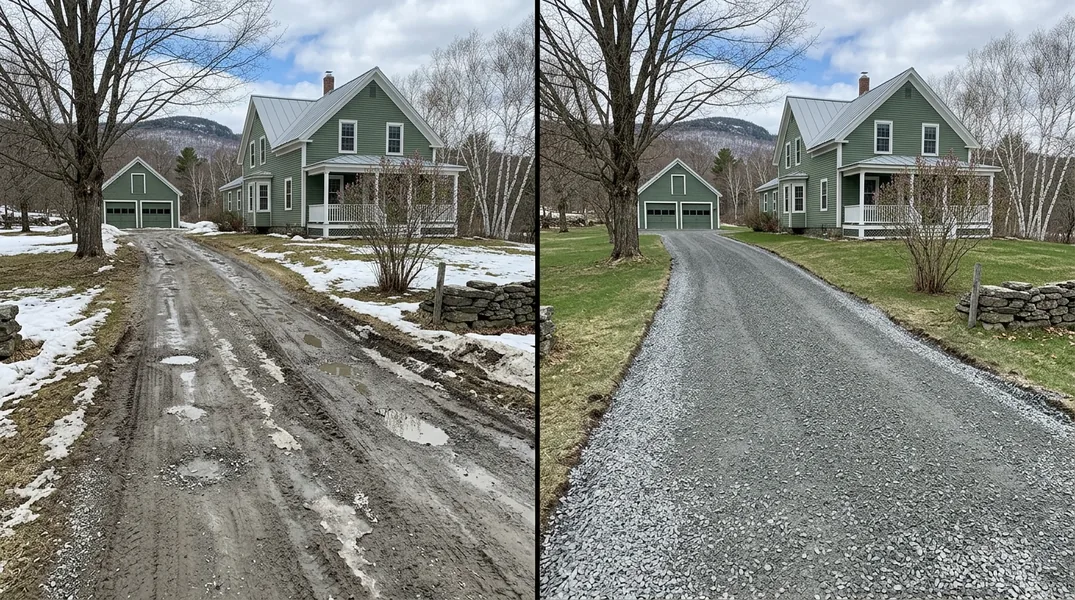
Why Mud Season Destroys Driveways in Vermont
If you live in Burlington or anywhere across Vermont, you know that mud season is more than just a seasonal inconvenience. It's a genuine threat to your driveway's structural integrity. When spring arrives and snow melts, the ground becomes saturated with water. Asphalt, despite its durability, is porous and absorbs moisture. This water infiltrates the base layers beneath your driveway, weakening the foundation and creating the perfect conditions for cracks, potholes, and severe settling.
The freeze-thaw cycle that follows makes things worse. Water trapped beneath the asphalt surface expands when it freezes, pushing upward and creating heaves and fractures. Over multiple seasons, this cycle causes exponential damage. Without proper driveway drainage solutions, homeowners in Burlington often find themselves facing expensive Driveway Repair or complete replacement. The good news is that proactive drainage planning can prevent most of this damage before it starts.
Understanding Water Pooling on Your Driveway
One of the most visible signs of a driveway drainage problem is water pooling on driveway surfaces. After rain or during snowmelt, you might notice standing water in certain areas rather than water flowing off the edges. This isn't just cosmetic. Pooled water sits on the asphalt surface, seeping downward and weakening the structural layers below. In Vermont's climate, pooling water freezes solid, creating ice hazards and accelerating deterioration through repeated freeze-thaw cycles.
Water pooling typically occurs in two scenarios: the driveway was installed with insufficient slope, or the surrounding grading has settled over time, creating low spots. Many older driveways in residential areas weren't built with adequate pitch to shed water effectively. The standard recommendation is a minimum slope of 1 to 2 percent (roughly 1 inch of drop per 50 feet of length). If your driveway doesn't meet this standard, water will naturally collect in low areas. Identifying these problem zones early allows you to address them before they become serious structural issues requiring major repair work.
Driveway French Drain Systems: A Proven Solution
A driveway french drain is one of the most effective subsurface solutions for managing water that infiltrates beneath asphalt. Unlike surface drainage, which directs water away from the top, a french drain system works underground. The system consists of a perforated pipe surrounded by gravel and landscape fabric, installed beneath or adjacent to the driveway. This pipe collects water that would otherwise pool beneath the asphalt and directs it away from the foundation area toward a designated drainage point or storm drain.
French drains are particularly valuable in Vermont because they address the root cause of moisture problems rather than just the symptoms. By intercepting groundwater before it accumulates under the asphalt, these systems prevent the hydrostatic pressure that causes heaving and cracking. Installation requires excavation along the driveway perimeter, which is why it's best done during new Asphalt Driveway Paving & Installation projects or when major repairs are planned. The investment pays dividends over the driveway's lifespan by extending its durability and reducing the need for costly maintenance.
When properly installed with appropriate slope toward the drainage outlet, a french drain system can virtually eliminate subsurface water problems. The gravel bed surrounding the perforated pipe allows water to flow freely while the landscape fabric prevents soil from clogging the system. In areas with heavy clay soil or poor natural drainage, this solution is often essential for driveway longevity.
Trench Drain Driveway Systems for Surface Water Management
While french drains handle subsurface water, trench drain driveway systems manage surface runoff before it has a chance to pool or seep downward. A trench drain consists of a narrow channel installed along the driveway edge or across problem areas, connected to a slotted grate or cover. Water flows into this channel and is directed away from the asphalt toward a storm drain, dry well, or landscaped area designed to absorb runoff.
Trench drains offer several advantages for homeowners. They're visible and straightforward to understand, they work immediately upon installation, and they don't require extensive excavation beneath the driveway itself. In Burlington, trench drains are often installed along the uphill side of a driveway or around the perimeter to intercept water before it pools. Modern trench drain systems come in various styles, from traditional concrete channels to contemporary polymer systems that blend more seamlessly with residential landscapes.
The key to trench drain effectiveness is proper slope and regular maintenance. The channel must slope toward the drainage outlet, and any debris (leaves, dirt, gravel) must be cleared regularly to prevent clogging. During mud season, when sediment-laden water flows across driveways, keeping the grate clean becomes especially important. When maintained properly, a trench drain system can be the difference between a dry driveway and one plagued by pooling water and premature deterioration.
Improving Driveway Slope and Grading
Sometimes the simplest solution is the most effective. If your driveway lacks proper slope, water won't drain naturally, no matter how well-constructed the surface is. Improving the grade of your driveway involves adjusting the slope so water flows away from structures and pools. This can be accomplished through Asphalt Resurfacing & Overlay projects, where a new layer of asphalt is applied with the correct pitch, or through more extensive grading adjustments if the underlying base needs modification.
For driveways that have settled unevenly over time, creating multiple low spots, addressing the grading becomes critical. This might involve adding fill material and compacting it properly, or in some cases, removing and replacing the entire driveway structure. The surrounding landscape also plays a role. Soil around the driveway should slope away from the asphalt, not toward it. If landscaping or ground settlement has reversed the natural grade, water will flow directly onto your driveway rather than away from it. A professional assessment can identify these issues and recommend the most cost-effective solution.
Professional Driveway Drainage Assessment and Installation Near Me
If you're concerned about water pooling or drainage issues on your driveway, the best first step is a professional evaluation. Burlington Asphalt Paving specializes in identifying drainage problems and recommending solutions tailored to your specific situation. A qualified technician will assess the current slope, identify low spots, evaluate subsurface conditions, and recommend whether you need surface drainage, subsurface solutions, or improved grading.
Every driveway is unique. Factors like soil type, local groundwater levels, roof runoff patterns, and existing landscaping all influence which drainage solution works best. What works perfectly for one home might not be ideal for another. That's why a professional assessment is invaluable. Burlington Asphalt Paving can evaluate your property, discuss your concerns, and provide a clear recommendation with transparent pricing for any recommended work. Contact us at (802) 214-7338 or request a free estimate to get started. We serve the Burlington area and surrounding communities, and we're ready to help you protect your driveway investment from Vermont's challenging seasonal conditions.
Looking for a professional asphalt paving contractor in Burlington? Burlington Asphalt Paving responds fast for all your asphalt paving needs.
Get a Free Quote